
D. Emerick Szilagyi, MD
#1: 1977-1987
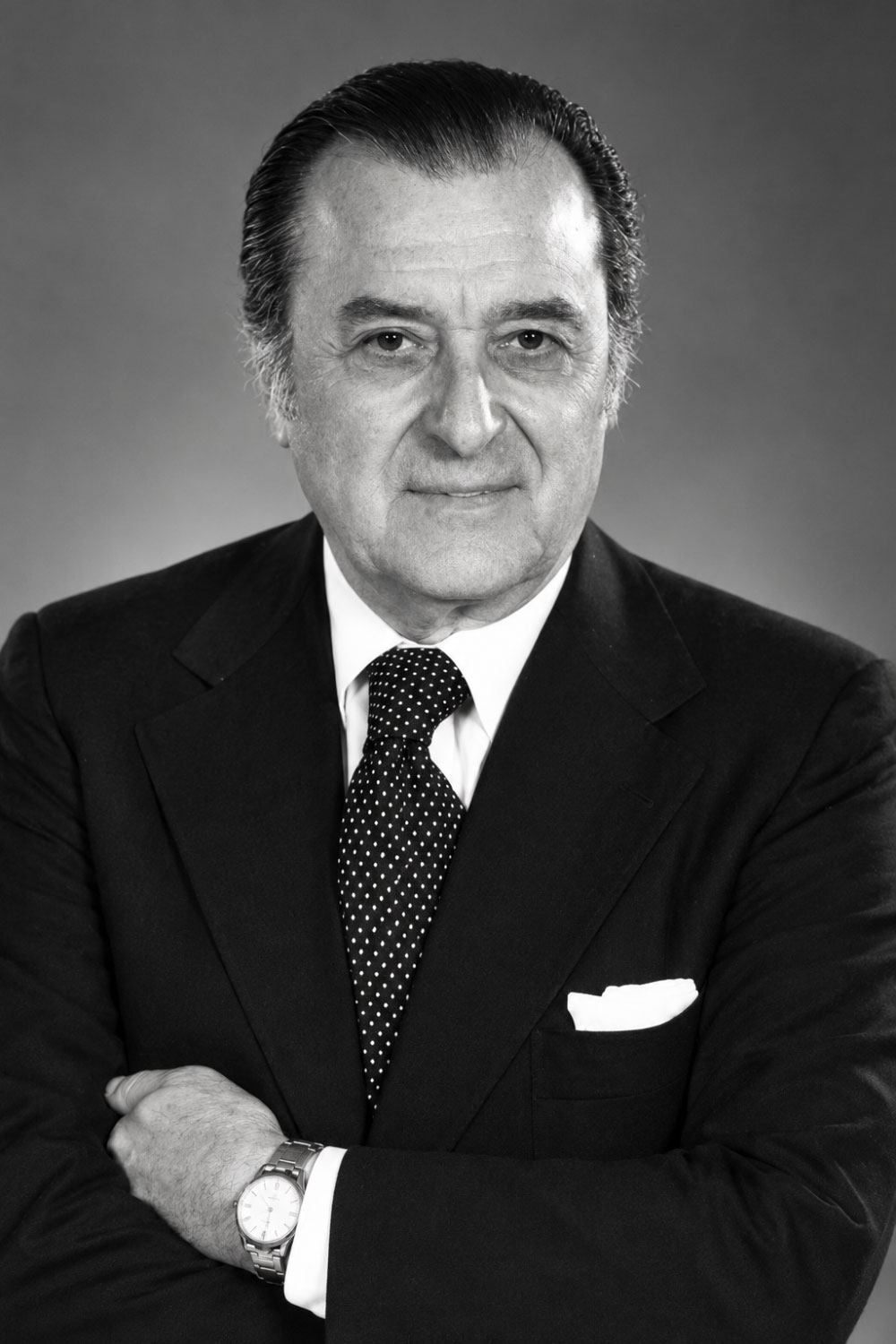
Dr. D. Emerick Szilagyi was born in Hungary on June 20, 1910. He had all of his pre-university education and his early university education in Europe. In the month of May, 1931, he migrated to the United States to join his parents in Detroit, Michigan. In September, 1931, he enrolled in the Medical School of the University of Michigan, from which he graduated, with honors, in June, 1935. He chose General Surgery as his field of specialization and entered the surgical training program at the University Hospital in Ann Arbor, Michigan, on July 1, 1935. After four years in this program, (which included two years in Pathology), he transferred to the Surgical Residency Educational Program at the Henry Ford Hospital in Detroit.
He was to complete his residency training program on June 30, 1942. Earlier that year, he passed the first part of the qualifying examination of The American Board of Surgery. He was preparing to enter military service when Dr. Roy D. McClure, Surgeon-in-Chief at Henry Ford Hospital, asked him to assume the position of Director of the Medical Department of the Henry Ford rubber plantations in the Amazonian Forest in Brazil. As this plantation was the only source of natural rubber available to the United States, this position was deemed to be critical to the war effort. This unique assignment included the obligation to administer a medical organization charged with the total health care of 3,000 people, which carried with it the responsibility of practicing medicine and surgery in all of their branches. After having been reclassified from IIIA to IIB (work essential for the war effort), he accepted this position.
Near the end of the second World War, in January of 1945, Dr. Szilagyi returned to the Henry Ford Hospital to begin a career in General Surgery, that ascended from the position of Assistant Surgeon to Chairman of the Department of Surgery. In 1975, after stepping down as Chairman, he was named Senior Consultant in Vascular Surgery.
Dr. Szilagyi developed an interest in surgical research early in his professional life, having published three scientific articles while still as resident. In subsequent years, he published reports on angiographic study of the changes in the venous circulation of the lower extremities after ligation of the common femoral vein, on the safe dosage of insulin administration after total pancreatectomy, and the optimal amount of thyroid tissue to be left in-situ after thyroidectomy for hyperthyroidism.
Dr. Szilagyi’s first experience with vascular surgery was in 1950, when he performed endarterectomy and reconstruction of the occluded femoral artery. In the early 1950’s, Dr. Szilagyi became one of the first surgeons in the world to begin resectional surgery of the abdominal aorta in humans. On December 24, 1951, he successfully resected an abdominal aortic aneurysm, shortly after the first such operation in the United States, by Dr. Ormond Julian of Chicago.
After the mid-1960s, Dr. Szilagyi’s clinical interest was confined to problems in the field of vascular surgery. He proved by accurate statistical analysis that the removal of an abdominal aortic aneurysm doubles the life expectancy of the patient. He developed a technique of sterilization and storage for human arterial allografts, but after extensive experience, he concluded and reported that human allografts are not suitable for transplantation. With his associates, he developed his own type of an elastic porous Dacron arterial substitute which was used in his clinical practice. After extensive laboratory investigation, he summarized his own observations and combined them with observations of other authors to provide a detailed description of the process of incorporation of porous synthetic arterial prostheses.
He described the histological changes in autogenous vein grafts used in the treatment of occlusive arterial disease of the lower extremities and published the first description of subintimal hyperplasia. His description of a medial tibial approach to the popliteal artery opened up the surgical exploration and therapy of infrapopliteal arterial occlusive disease. His carefully studied series of cases in aortoiliac and femoropopliteal surgery are landmarks in the surgical literature. These studies and many other investigations of postoperative complications were made possible by the availability of data in a computerized follow-up system established in 1956.
During his tenure as Chairman of the Department of Surgery (1965-1975), along with Dr. Richmond Smith, Chairman of the Department of Medicine, he spearheaded the development of the Henry Ford Hospital Satellite System.
He is the author of over 200 articles in the medical literature. He has served as President of the Central Surgical Association, the International Cardiovascular Society, the Society for Vascular Surgery, and the Western Surgical Association. He was the Founding President of the Midwestern Vascular Surgical Society. He has served as senior editor of the Journal of Vascular Surgery (1984-1990) and as Consulting Editor of the Journal (1990-1996).
During the years between 1955 and 1985, Dr. Szilagyi lectured extensively in the United States and throughout the world. He received an Honorary Doctorate in Medicine from the Semmelwiess University in Budapest, as well as The Lifetime Achievement Award of the Society for Vascular Surgery, the oldest vascular society in the world. In 2002, the Henry Ford Hospital established the D. Emerick and Eve Szilagyi Endowed Chair in Vascular Surgery, in recognition of a lifetime of achievements.
Dr. Szilagyi terminated his operating room work in 1984. His wife of 30 years, Evelyn Harper, an accomplished artist, was lost to cancer in 1981. In 1989, he married Sally Stritch. He retired from clinical practice in 1997, at the age of 87. Now in his nineties, he lives with Sally in Bloomfield Hills, a suburb of Detroit, and enjoys good general health.
His literary activity has not yet ceased. His last scientific article appeared in 2004, in the Journal of Vascular Surgery. It deals with “the widely disregarded fact” that arterial prostheses placed intraluminally in arterial structures do not become appropriately incorporated; and, therefore, their functional durability is limited.
In September 2005, Dr. Szilagyi addressed the general assembly of the Midwestern Vascular Society at the time of the inauguration of the annual D. Emerick Szilagyi Award for outstanding research performed by a resident in training.
